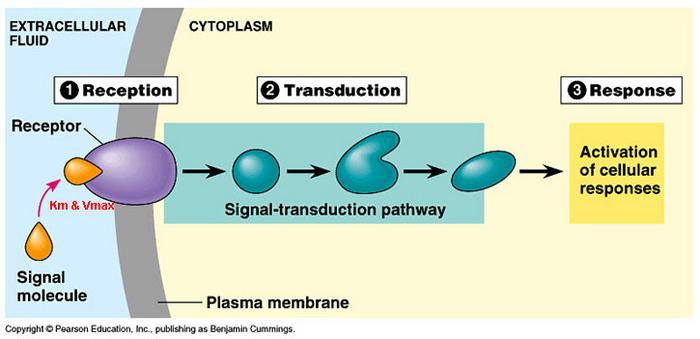
Cell communication has 3 main steps: reception, transduction, and response. In reception, a signal molecule fits and binds into a receptor. The signal and receptor should fit like a lock and key. This creates a signal transduction pathway, where the relay molecules change their form in order to activate a cellular response. Once the molecules change their shape, a response is activated and trasmitted.
These steps could be seen through our activity on Friday based on cell communication. When the person playing the signal molecule touched another person on the activity, it created a chain reaction where people began changing their positions until the person at the end of the chain started running. The person running represented the response, before the signal molecule touched the receptor, the person was standing still with their eyes closed. This chain reaction represented the signal transduction pathway, in other words, form and function. Once the receptor activated, everyone changed their positions and began doing some other form of physical activity. This symbolized how molecules in the signal-transduction pathway have to change their form in order to change their function.

No comments:
Post a Comment